
Metal Roof Full or Partial Replacement After Storm or Disaster Damage
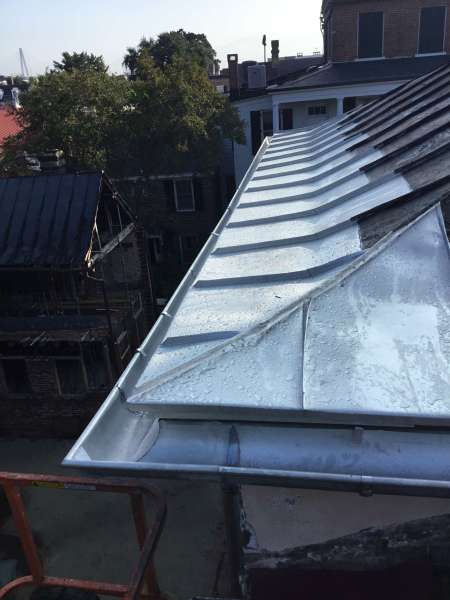
When evaluating storm or disaster damage, insurance adjusters often face the same question: should this be a metal roof full or partial replacement?
Visible damage may appear localized. A small number of panels may show hail impact, wind deformation, or fire exposure. On paper, partial replacement looks efficient.
However, a metal roof full or partial replacement decision is not only about replacing damaged panels. It is about determining whether the existing system has reached the end of its service life and whether repeating short-cycle repairs serves anyone involved.
A metal roof is a structural envelope component. It manages expansion, water path, fastening loads, and environmental exposure as a unified assembly. If the system has been previously repaired, patched, or repeatedly restored, partial intervention may extend a failure cycle rather than resolve it.
The Cost of Re-Repairing Metal Roof Systems
Insurance carriers see it every year. The same building files multiple claims over time. Each event triggers localized repair. Each repair integrates into aging material. Performance gradually declines.
A metal roof full or partial replacement review should ask a different question:
Is this roof being repaired again, or restored properly?
Repeated partial repairs often create:
• Mismatched panel behavior
• Compromised transitions and flashings
• Reduced long-term durability
• Increased probability of future claims
In many cases, a full restoration approach is more cost-effective over the lifecycle of the building than cyclical patching.
Board-Certified Restoration and Generational Performance
Spengler Industries is board certified in restoration and reconstruction. That distinction matters in a metal roof full or partial replacement evaluation.
Historic metal systems such as terne, copper, and specialty steel assemblies require disciplined geometry, sequencing, and detailing. When restored correctly, these systems can perform for generations with minimal maintenance.
When restored repeatedly without structural discipline, they become recurring liabilities.
A metal roof full or partial replacement decision should consider:
• Remaining service life of the system
• Compatibility with modern high-performance materials
• Environmental exposure severity
• Whether the owner intends to maintain the building long term
If the objective is to prevent repeat claims and stabilize the envelope permanently, a properly engineered full restoration may serve all parties better than incremental panel swaps.
Choosing a Maintenance-Free Restoration Path
Modern architectural metal systems such as high-performance zinc, copper, and PVDF-coated steel can provide long-term durability when installed with disciplined expansion and water management design.
The goal of a metal roof full or partial replacement review should be simple:
Install a solution that does not require re-restoration in ten years.
You can review available material systems here:
https://spenglerindustries.com/materials/
For severe weather environments:
https://spenglerindustries.com/roofing-severe-weather/
Industry guidance from the Metal Construction Association reinforces evaluating metal roofing as complete assemblies, not isolated components:
https://www.metalconstruction.org/
Technical Review for Insurance Professionals
If you are evaluating a metal roof full or partial replacement, we are available to review panel profile, system age, and restoration feasibility.
Our focus is long-term performance. The objective is not to close a file quickly. It is to close it correctly.
Call us for your historic restoration project today! 801-462-5264