
The Craft Behind a Metal Dome Roof
Few architectural elements communicate permanence and beauty like a dome.
Domes appear throughout architectural history: churches, civic buildings, observatories, and historic landmarks, because they combine structural efficiency with unmistakable visual presence. Yet building a dome roof correctly requires specialized fabrication, geometry, and installation expertise.
At Spengler Industries, dome projects are among the most technically demanding systems we fabricate and install. Every dome roof requires custom engineering and careful panel layout to maintain geometry, water control, and structural performance.
The metal dome roof shown above demonstrates how precision fabrication and master-level installation come together to produce a clean, long-lasting architectural feature.
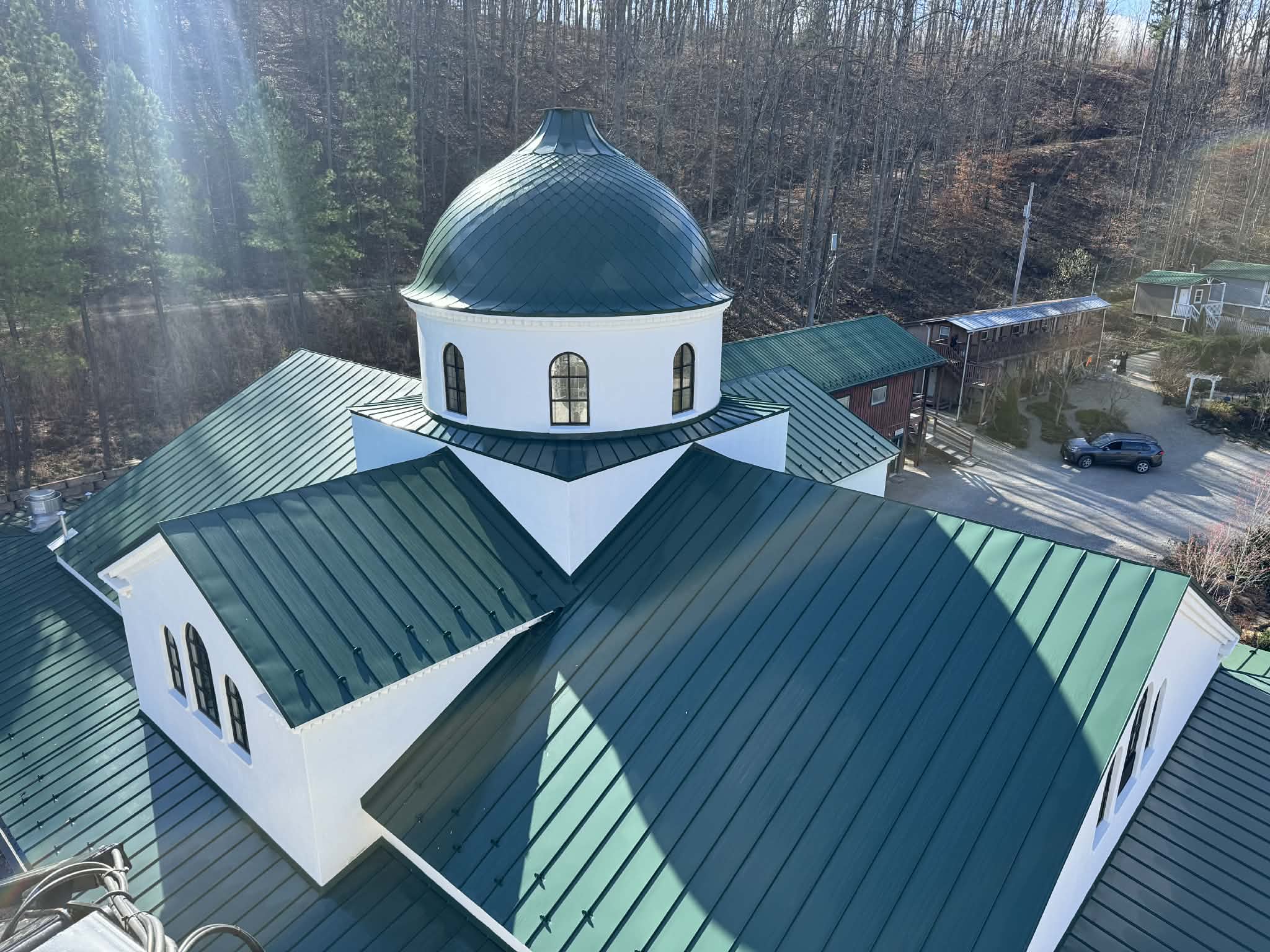
Image courtesy of installer, Juan Leon.
Why Metal Is the Ideal Material for Dome Roofs
A dome roof requires a material that can adapt to curvature without sacrificing durability.
Architectural metals such as zinc, copper, steel, and aluminum allow panels to be formed into radial layouts that follow the dome geometry. When fabricated correctly, these systems provide:
- Long service life
- Excellent water shedding
- High wind resistance
- Minimal maintenance
- Architectural flexibility
Standing seam systems are particularly effective for dome construction because seams follow the radial pattern of the dome, directing water down the surface while maintaining structural integrity.
These systems have been used for centuries on churches and historic buildings because they perform reliably in difficult conditions.
The Engineering Behind Dome Roof Construction
A dome roof is not simply a curved roof.
The geometry of a dome requires careful planning long before fabrication begins. Each panel must be dimensioned so the seams converge correctly at the apex while maintaining consistent spacing along the curve.
Key design considerations include:
Radial Panel Layout
Panels taper as they approach the top of the dome. Precise layout ensures symmetry and proper water flow.
Panel Forming
Panels must be roll-formed or custom-fabricated to accommodate curvature without oil-canning or distortion.
Apex Detailing
The crown of the dome requires specialized flashing to seal the intersection of all radial seams.
Structural Integration
The dome structure must support wind loads, snow loads, and thermal movement.
When these details are handled correctly, a dome roof becomes one of the most durable systems on a building.
Dome Roofs for Churches and Architectural Landmarks
Many dome projects occur on churches or historic buildings where architectural accuracy matters.
In these environments, the dome often functions as the visual centerpiece of the structure. Materials such as pre-patinated copper, zinc, or coated architectural steel allow designers to achieve the desired aesthetic while maintaining performance.
The green dome roof shown above illustrates how color and geometry combine to create a strong architectural statement while preserving the long-term durability expected of a metal roof system.
Why Dome Roofing Requires Specialized Fabrication
Not every roofing contractor can build a dome.
Dome roofs require:
- Custom panel fabrication
- Advanced layout geometry
- Expert sheet metal craftsmanship
- Installation crews experienced with curved systems
This type of work is rooted in the European Spengler craft tradition, where sheet metal is shaped to complex architectural forms.
At Spengler Industries, we fabricate and install metal dome roofs for churches, historic restorations, and custom architectural projects throughout the United States.
If your project includes a dome or curved roof system, early collaboration with a fabrication specialist is critical.
Learn more about our dome work here:
https://spenglerindustries.com/dome-roofs/