
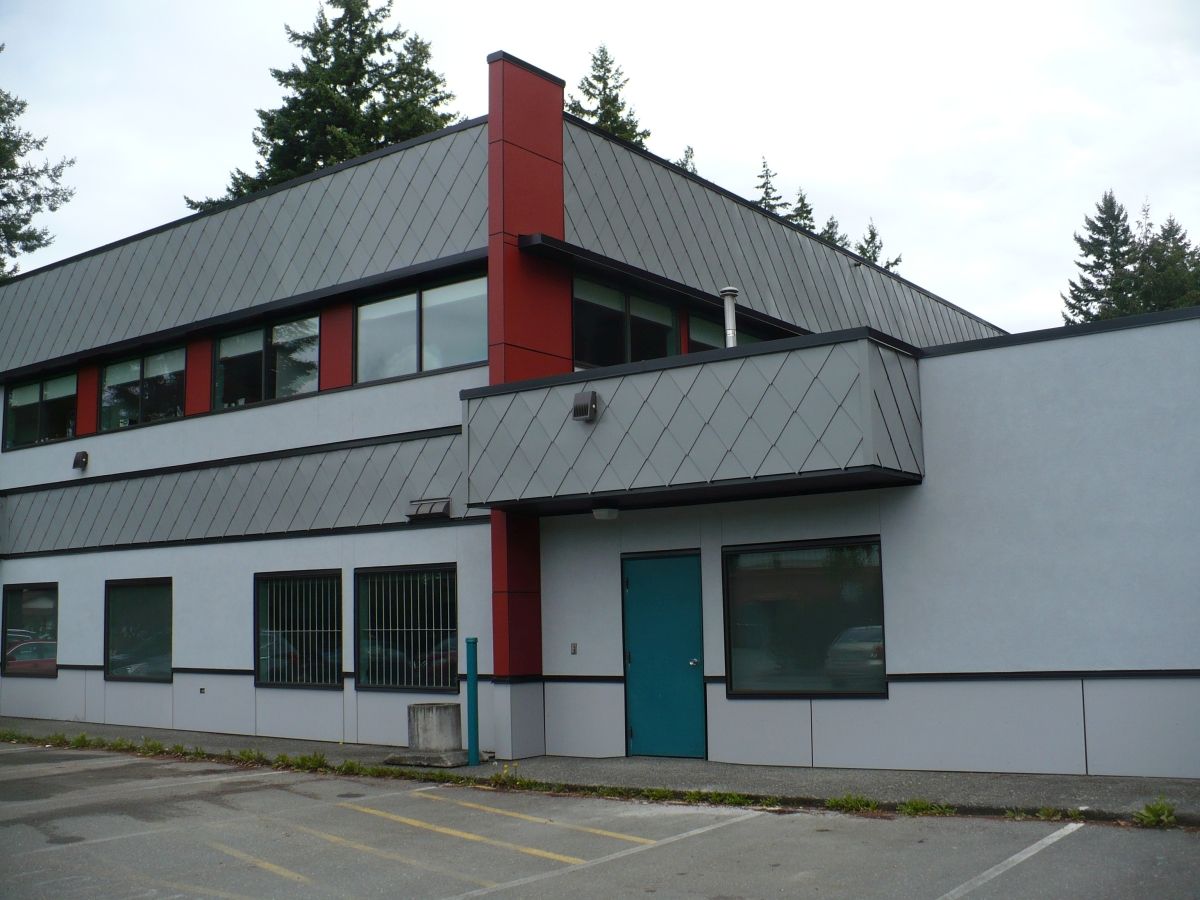
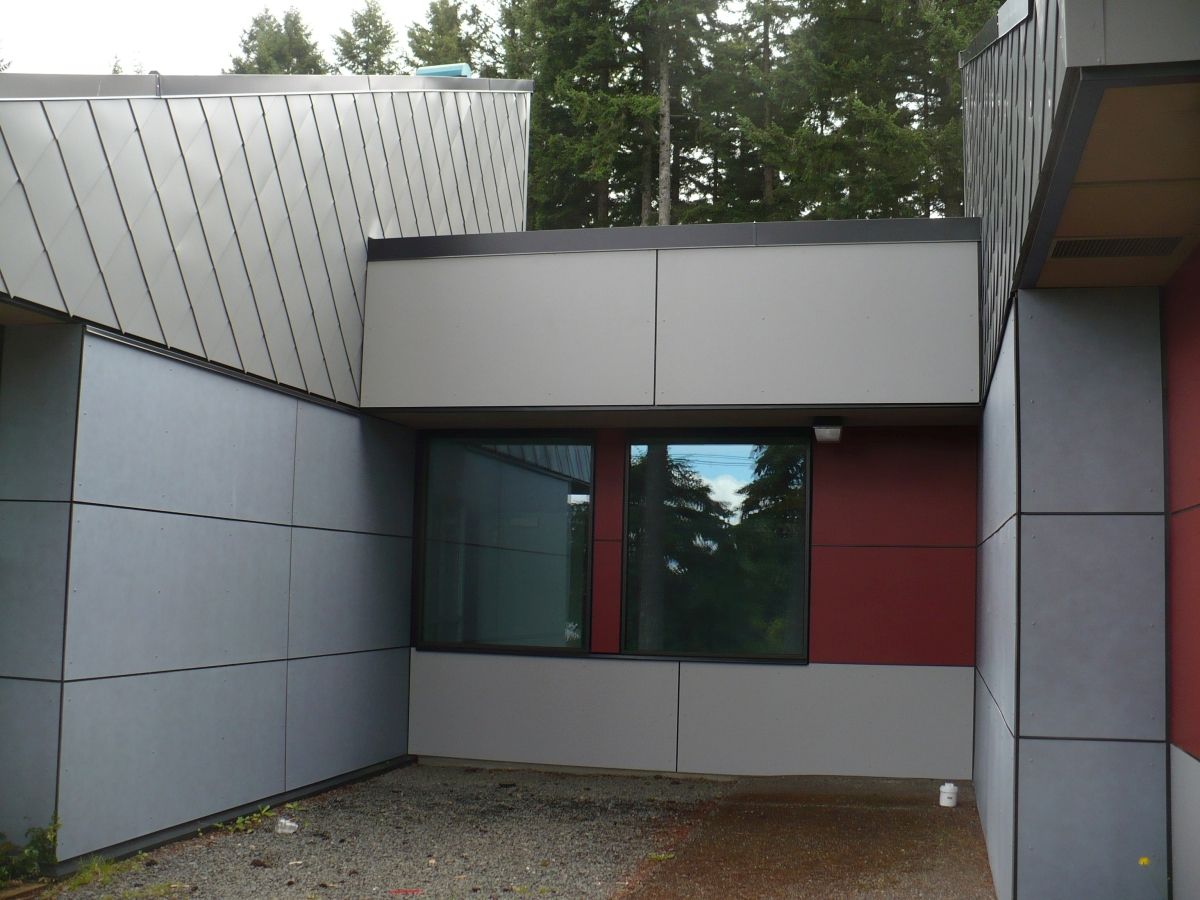
Most people picture diamond metal shingles on a roof. On this campus building in the Pacific Northwest, Spengler’s painted Galvalume diamond shingles do a good deal more. They cover sloped upper walls, run as horizontal bands between window rows, and wrap cantilevered canopy boxes over the entrances, all in one continuous pattern. Here is what the project shows about using metal shingles as wall cladding, and why the diamond is such a good fit for a wet, wooded site.
Why Diamond Metal Shingles Work as Wall Cladding
A diamond shingle is a small, flat metal unit set on its point. Each one overlaps its neighbors along folded, interlocking edges, so water runs down the diagonals and off the surface. That is exactly what you want on a roof, and it works just as well on a wall.
The small unit size is the other advantage. Large panels want long, flat, uninterrupted planes. Diamonds can follow a building wherever it goes: up a slope, around a corner, across a narrow band between two rows of windows, or over the face of a box that sticks out from the wall. The pattern stays consistent, so the whole envelope reads as one material.
From a distance, the diamond grid gives a facade texture and scale. Up close, the crisp folded seams catch light and shadow differently through the day.
One Pattern Across Roofs, Walls and Canopies
This building uses diamond metal shingles in three different ways.
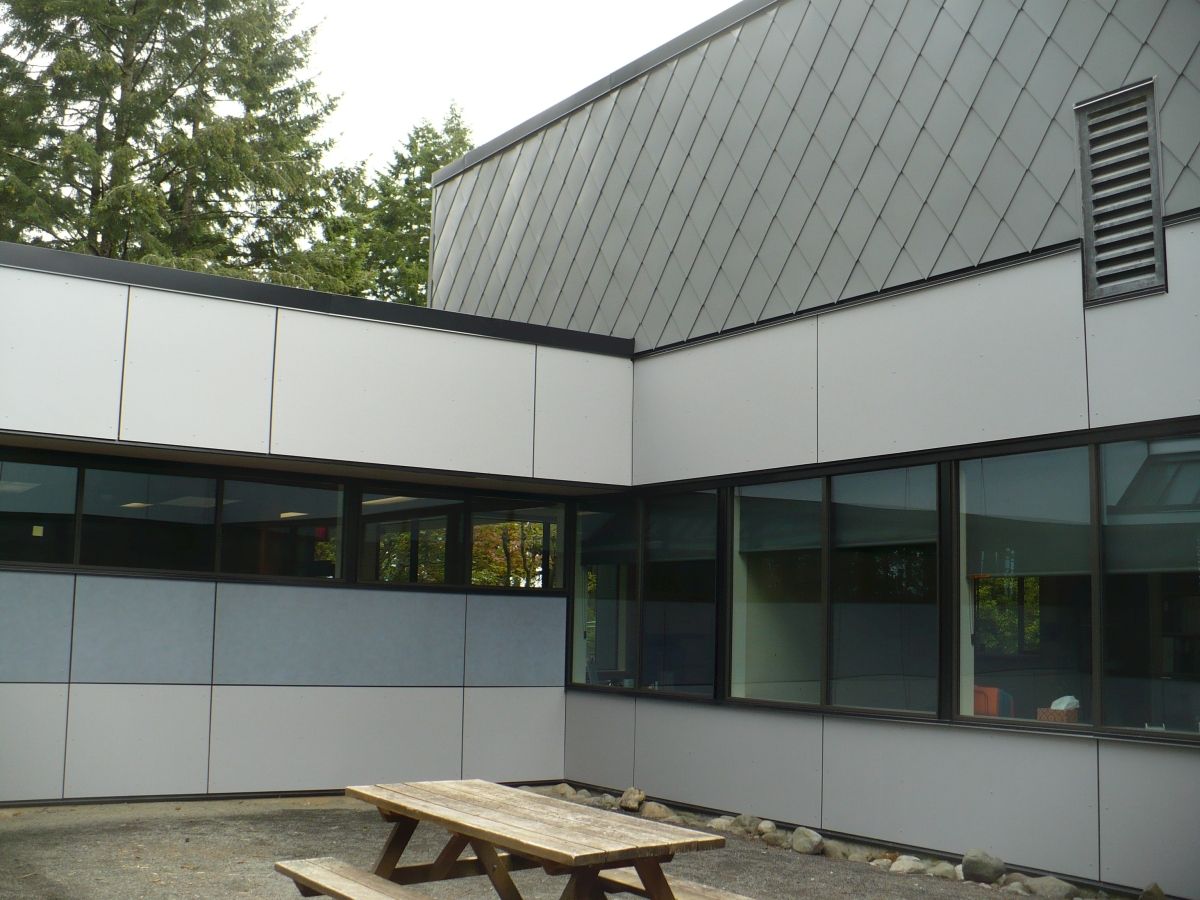
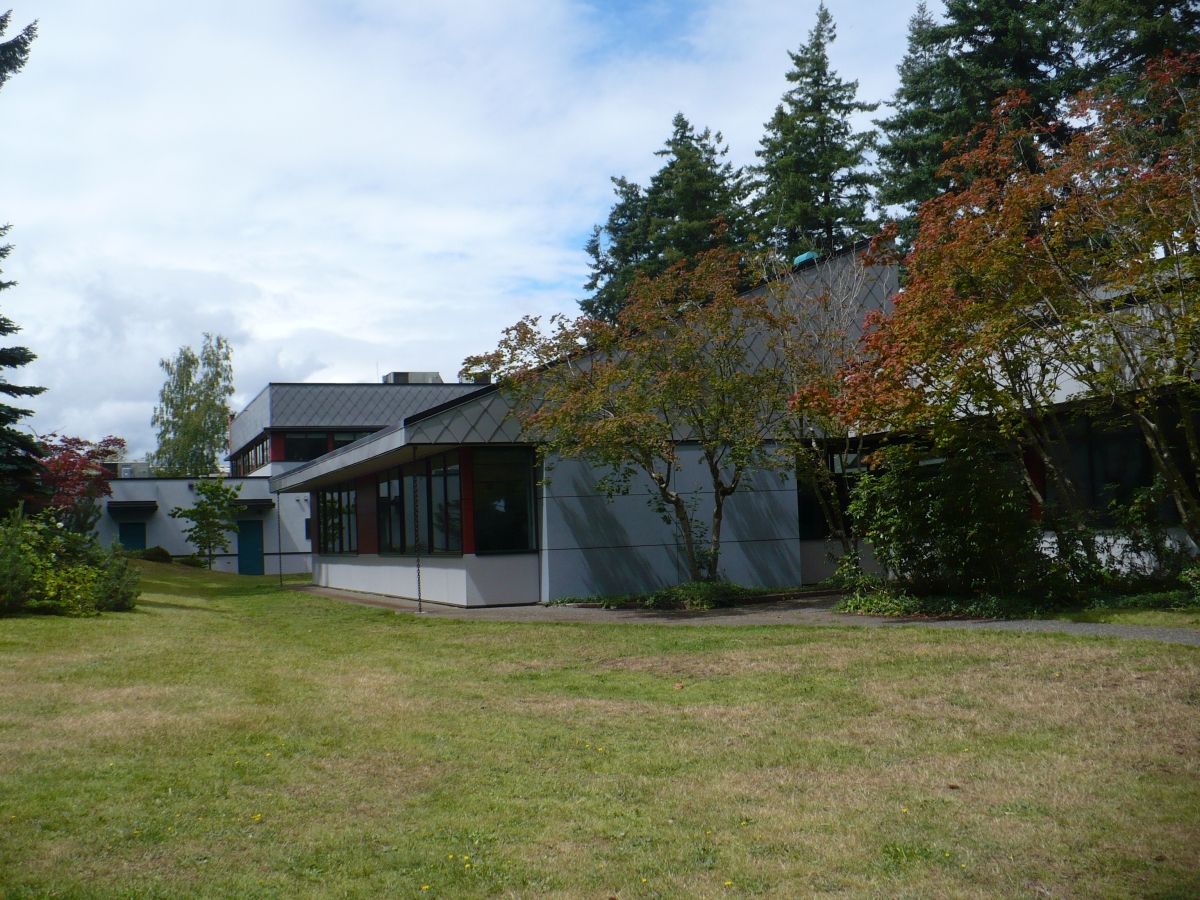
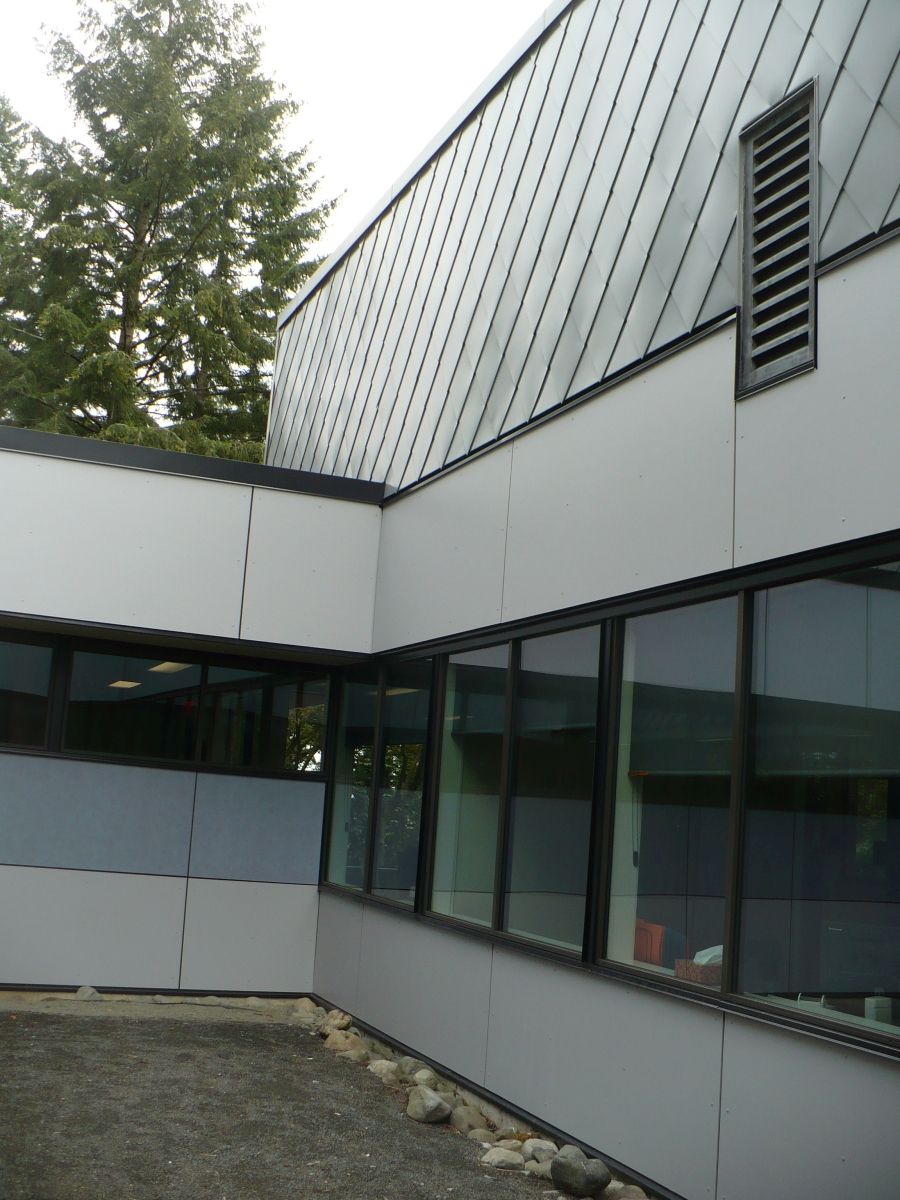
Sloped upper walls. The upper story of the main block leans back like a mansard. The shingles run up the slope above a continuous band of windows, which gives the building its distinctive profile from the parking lot.
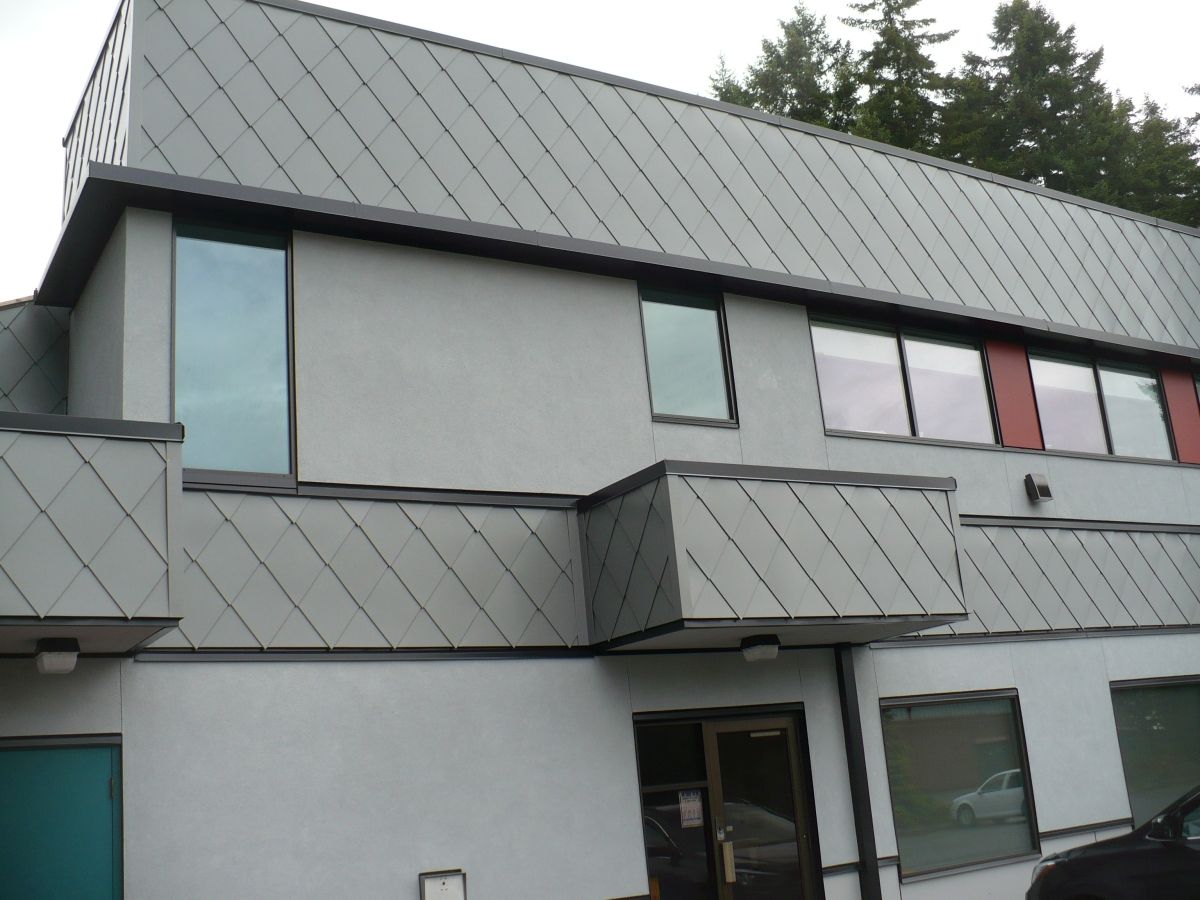
Horizontal wall bands. Lower down, a band of diamonds runs flat on the vertical wall between the first and second floor windows, trimmed top and bottom with dark flashing.
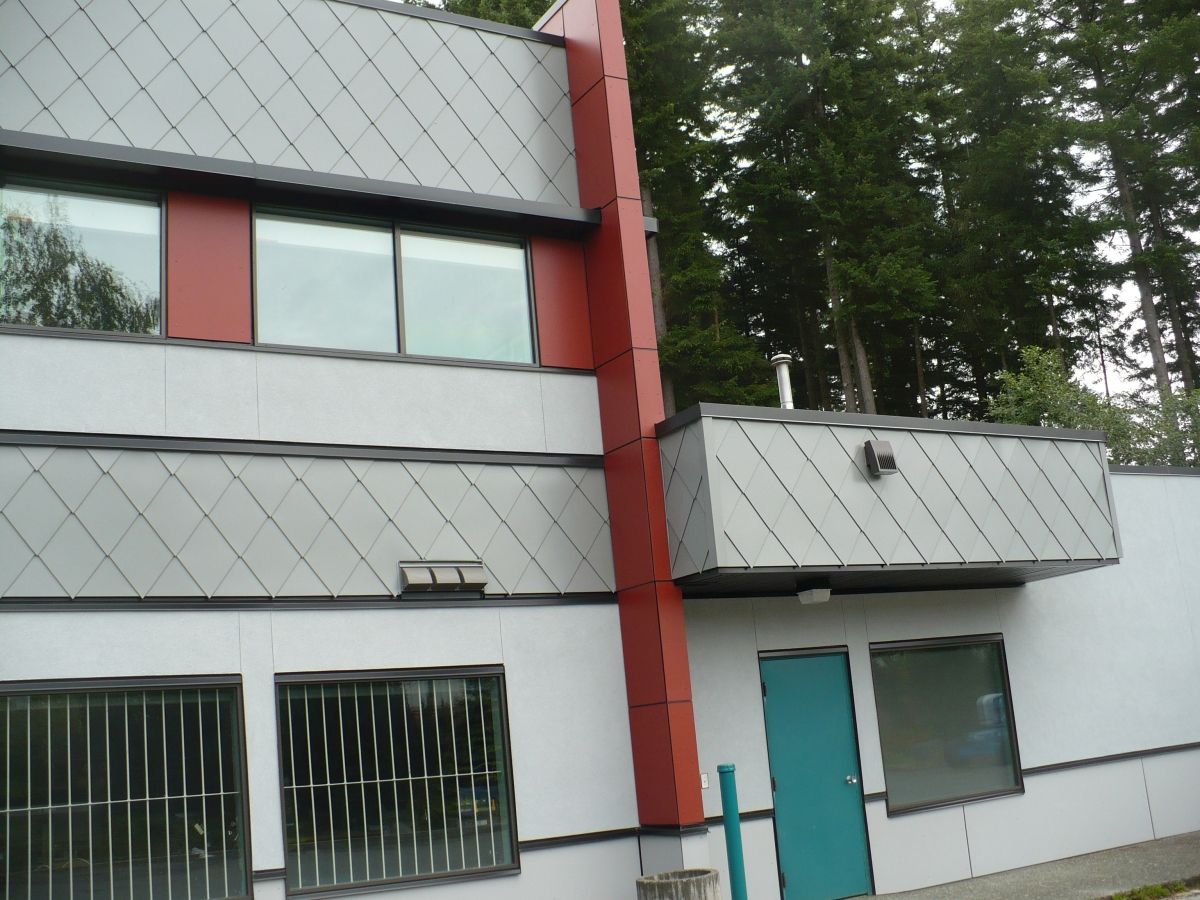
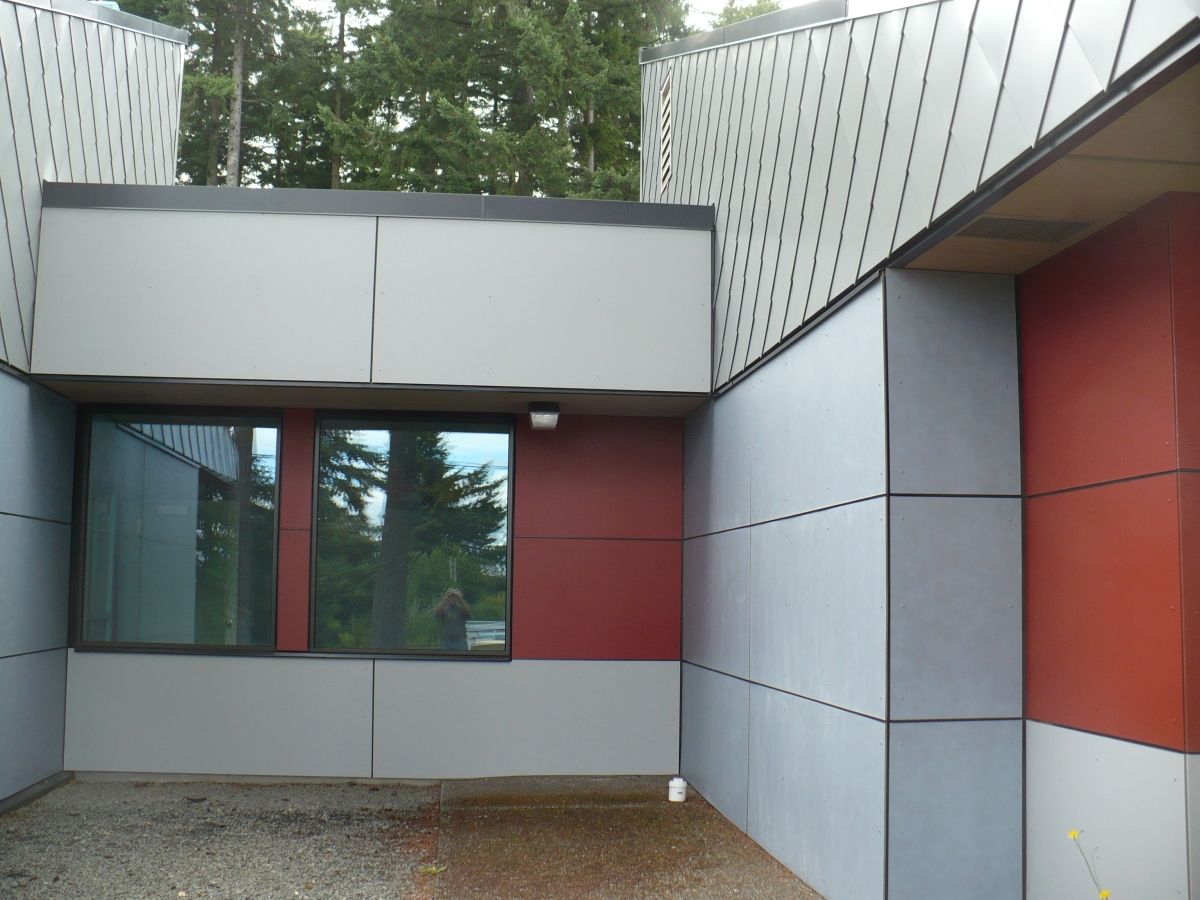
Canopy boxes. Over the entrances, cantilevered boxes are wrapped in shingles on the front and both ends. These are the kind of small, three-sided volumes where flat panels often look pieced together. With diamonds, the pattern simply turns the corner.
Built for a Wet, Wooded Site
The Pacific Northwest is hard on buildings. Rain arrives for months at a time, the site sits under tall firs, and needles, moss and moisture are part of daily life. Wood siding in that setting needs regular attention.
The shingles on this project are Galvalume, which is steel coated with an aluminum and zinc alloy, finished with a paint system. There is no wood in the exposed cladding to rot or split. The folded edges shed water instead of holding it, and the light metal units put very little weight on the wall.
The result is a facade that still looks crisp among the trees, and keeps its geometry through the wet seasons.
Pairing Metal Shingles with Panel Cladding
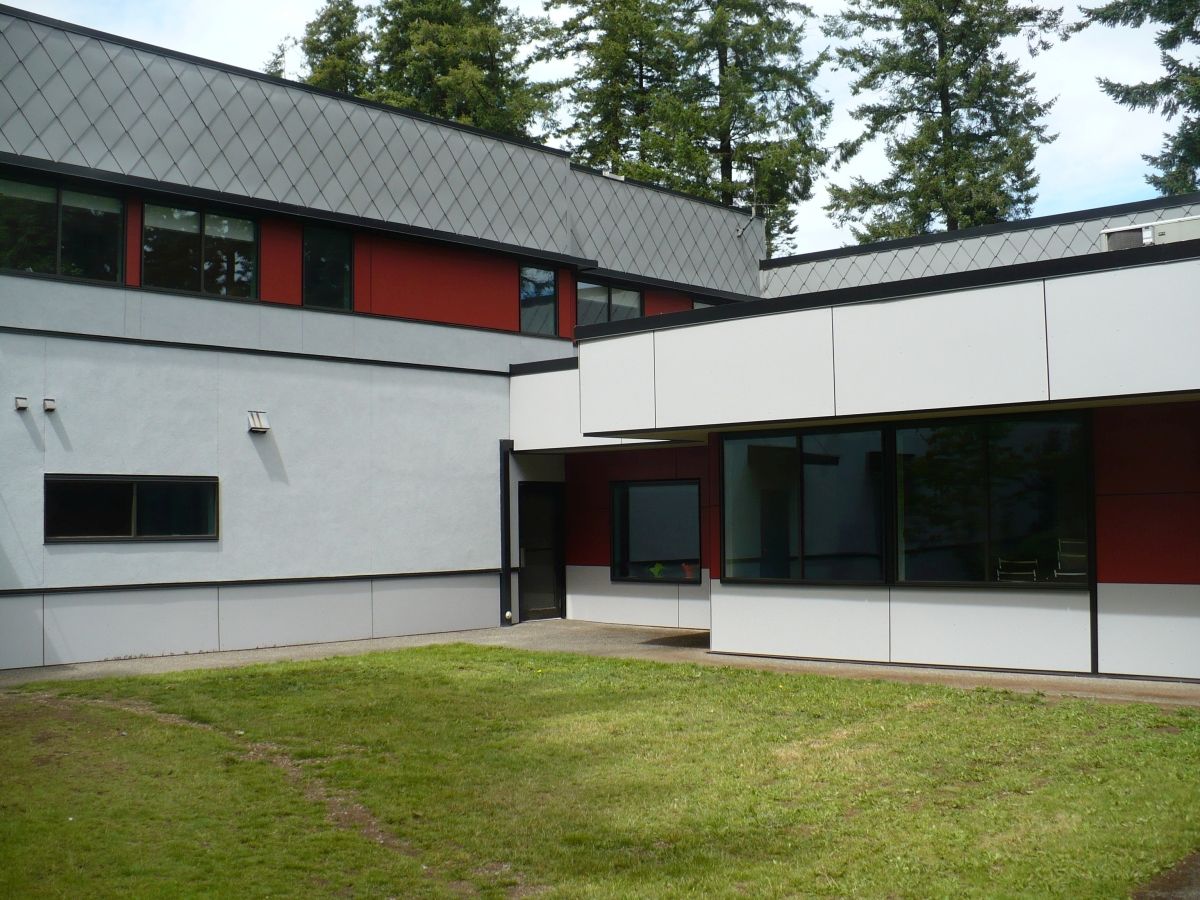
The architects combined the diamond shingles with large flat panels in white, gray and a deep red. The pairing works because the two materials do opposite jobs. The panels give calm, flat fields of color. The diamonds give texture and mark the higher, sloped parts of the building, so you can read its massing at a glance.
The shingles also take penetrations well. Louvered vents sit right inside the diamond field, with the pattern laid out to meet the louver frames cleanly.
Details That Make or Break a Diamond Shingle Facade
A diamond pattern is unforgiving. If the layout drifts, everybody can see it. The work that makes a facade like this look effortless happens before anything goes on the wall:
- Layout. The grid has to land cleanly at corners, at the top edge, at the base trim, and around every vent and opening.
- Trims and transitions. Starter strips, edge trims and flashings have to be detailed so the shingles finish neatly against panels, windows and roof edges.
- Fabrication accuracy. Every shingle needs to be the same size and fold, so the pattern stays straight across a long wall.
This is the part of the job Spengler cares about most. We fabricate our diamond shingles and work with architects and installers on the layout and the details, so the finished building looks the way it was drawn.
Frequently Asked Questions About Diamond Metal Shingles
Can diamond metal shingles be used as siding? Yes. The same shingle that sheds water on a roof sheds it on a vertical wall. This project uses them on sloped walls, vertical wall bands and canopy faces.
What is Galvalume? Galvalume is steel with a protective coating of aluminum and zinc alloy. On this project it carries a painted finish.
Do metal shingles work in rainy climates? They are well suited to them. The overlapping, folded edges move water down and off the surface, and the metal does not rot.
Can diamond shingles handle complicated shapes? Yes. Because each unit is small, diamonds can follow slopes, corners and small projecting volumes that are awkward for large panels.
Planning a Project with Diamond Metal Shingles?
Whether you are designing a roof, a facade, or both, we are happy to help with layout, details and finishes. See more of our work in the metal shingle gallery, learn about our diamond metal shingles and rainscreen and wall cladding, or contact Spengler Industries to talk through your project.