
Most metal roof myths come from one building: the barn. Thin sheet metal nailed over open rafters, with no deck, no insulation and no finish, is loud, hot and quick to rust. A metal roof on a house is built nothing like that.
Here are six metal roof myths we hear every week, and what is actually true about each.
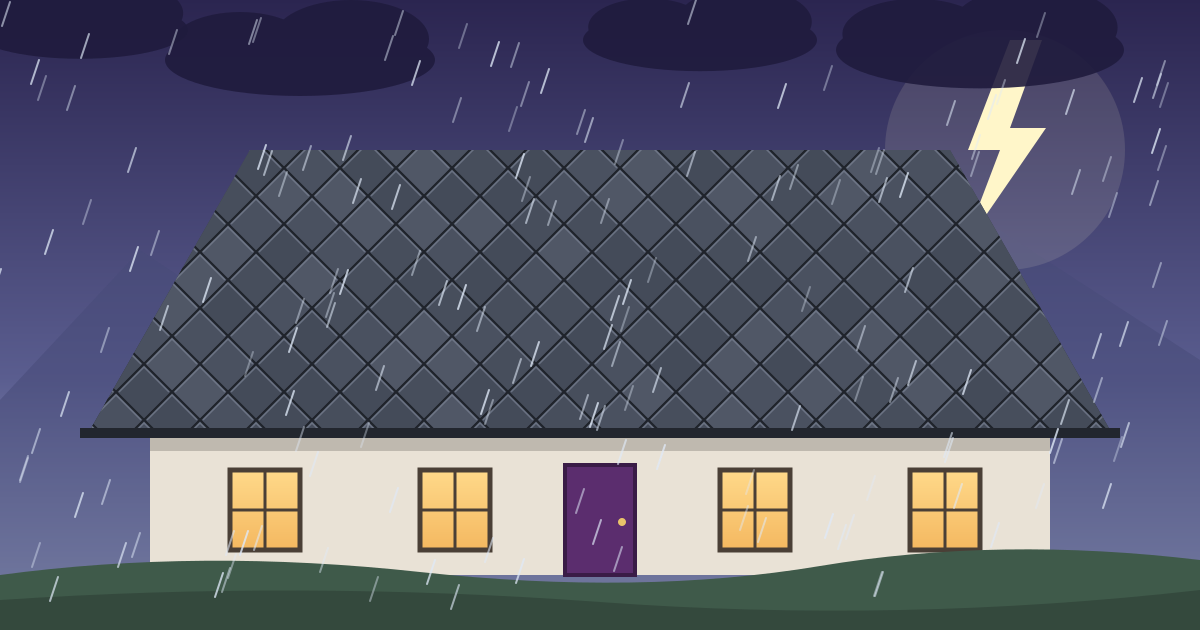
Myth 1: Metal roofs are loud in the rain
On a barn, yes. On a house, the metal sits on a solid roof deck with underlayment beneath it and an insulated attic or ceiling below that. Those layers soak up the sound.
Small interlocking shingles help further, because there is no long stretch of loose metal to drum. Rain on a metal shingle roof sounds much like rain on any other roof. If you were hoping for the romance of rain on a tin roof, we are sorry to disappoint.
Myth 2: Metal roofs attract lightning
Lightning goes for what is tall and exposed. What the roof is made of does not enter into it. The Metal Construction Association’s bulletin on lightning strikes and metal roofing puts it plainly: a metal roof neither attracts lightning nor protects against it.
If a building is struck, metal has one advantage. It does not burn.
Myth 3: Metal roofs make a house hot
Metal is thin, so it gives up its heat quickly once the sun is off it. How much heat it takes on in the first place depends on the finish, and lighter, more reflective colors take on less.
What really decides the temperature indoors is below the roof: the insulation and the ventilation. A well insulated house is comfortable under metal, and a poorly insulated one is uncomfortable under anything.
Myth 4: Metal roofs rust
Bare steel rusts. Modern steel roofing is not bare. It carries a metallic coating that protects the steel, and a painted finish over that.
Place matters, though. Salt air is hard on coated steel, which is why we make a marine grade and recommend it within 1,500 feet of salt water.
Myth 5: Metal is too heavy for my house
It is the other way around. Metal is among the lightest roofing materials there is, far lighter than tile or slate and lighter than most asphalt shingles.
A house that carries an ordinary roof today can almost always carry a metal one without added structure.
Myth 6: Metal roofs look industrial
Some do. Long ribbed panels with exposed screws belong on a warehouse.
A diamond metal shingle roof is a different thing. The pattern has covered European houses, churches and towers for centuries, and it comes in a wide range of colors and finishes, wood grain among them. Have a look at our metal shingle gallery and judge for yourself.
What is true behind the metal roof myths
Fairness requires a short list of things that are true:
- Metal costs more up front. It earns that back by being replaced far less often.
- Snow slides off it. In snow country, a metal roof needs snow guards planned into the design.
- Installation takes skill. A good metal roof installed badly is a bad roof.
None of these is a reason to avoid metal. They are reasons to choose the product and the installer with care.
Have a question we did not answer? Contact Spengler Industries and ask. We like the hard ones.